
This itinerary takes you on a fascinating journey through some of the most iconic historical and natural landmarks of the region. Begin with the Western Thousand Buddha Caves, where you’ll marvel at centuries-old Buddhist sculptures and murals carved into the cliffs. Next, visit the legendary Yang Gate and Yumen Gate, ancient frontier passes that once guarded the Silk Road and witnessed countless travelers and traders. The trip concludes at the Yadan Devil City, a dramatic geological wonder featuring bizarre, wind-sculpted rock formations that create an otherworldly landscape. This route offers a unique blend of cultural heritage and natural beauty, perfect for history buffs and nature lovers alike.
Western Thousand Buddha Caves--Yang Gate--Yumen Gate--Yadan Devil City
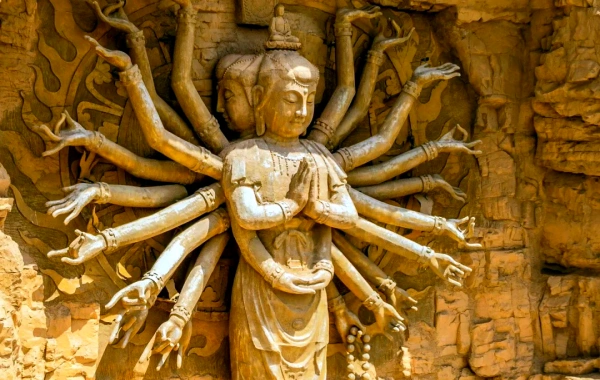
In the morning, you will be picked up from your hotel and head to Xiqianfo Cave. This cave is an important part of Dunhuang's art heritage. The exact date of its construction is unknown, but according to the Dunhuang manuscripts stored in Paris, specifically the "Shazhou Dudu Fu Tu Jing," archaeological and historical experts suggest that the cave was established before Mogao Grottoes and likely existed during the same period as Mogao. The current Xiqianfo Cave houses 34 statues and over 800 square meters of murals. Many of the statues were restored during the Qing Dynasty and the Republic of China era, but a few have retained their original forms. The style of the murals is similar to those in Mogao Grottoes. Xiqianfo Cave has its own distinct features, particularly in its rock art, where multiple generations have made partial repairs, showcasing the artistic styles of different eras within the same cave.
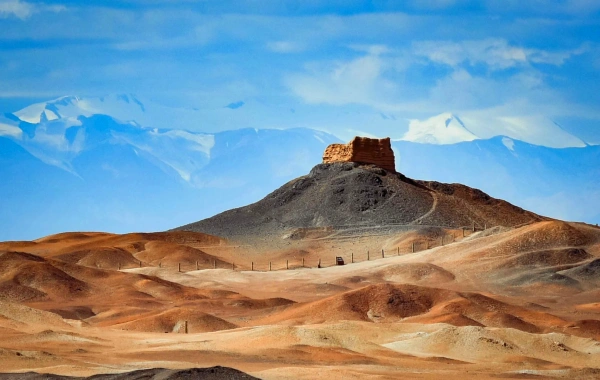
Next, you will travel to Yangguan. Built during the reign of Emperor Wu of the Han Dynasty around 120 BC, it was reinforced and became a frontier defense outpost, playing a significant role as a key checkpoint on the ancient Silk Road. Located on the southern route to the Western Regions, Yangguan was also known as one of the two most important western gates of ancient China, alongside Yumenguan. Yangguan is often associated with sorrowful farewells in Chinese literature, especially in frontier poetry, as it represented the last stop in China before traveling westward into the unknown.
In the afternoon, you will continue your journey to Yumenguan, a critical pass on the ancient Han Silk Road. Along with Yangguan, Yumenguan is referred to as "The Two Passes." It has long been a source of inspiration for poets and scholars, with Tang Dynasty poet Wang Zhihuan famously writing, "Why should the Qiang flute complain about the willows? The spring breeze doesn't reach Yumenguan." The ruins of the Han Great Wall are a UNESCO World Heritage site, and you will see a preserved 300-meter stretch of earthen wall, built using reeds and gravel, showcasing the wisdom of the ancient builders.
Yumenguan Scenic Area Performance (available only in peak season):
-
The Welcoming Ceremony of the Duwei (Military Officer);
-
Qin songs and Han dances;
-
Ancient passports (travel permits);
-
Han battle drums.
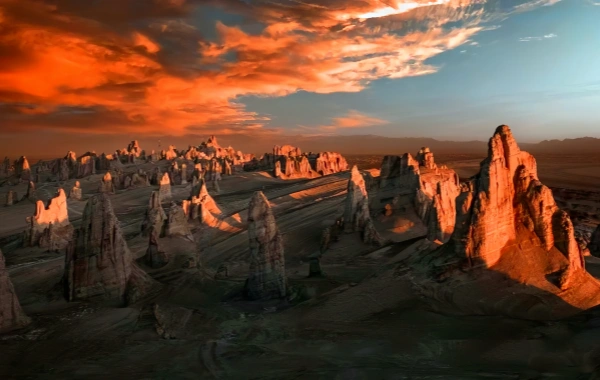
Finally, you will head to the Yadan Devil City, a typical wind-eroded landscape known for the eerie sounds it makes when strong winds howl, earning it the name "Devil City." This place is considered a "geological wonder of the world."
Friendly Reminders:
-
Recommended items to bring: Sunscreen, sunglasses, windproof face mask (Yadan is very windy), plenty of water and snacks (no shops in the area), camera + wide-angle lens (ideal for capturing the vast scenery).
-
Drones are strictly prohibited in the scenic area.
-
Please avoid wandering into closed areas, as it is easy to get lost.